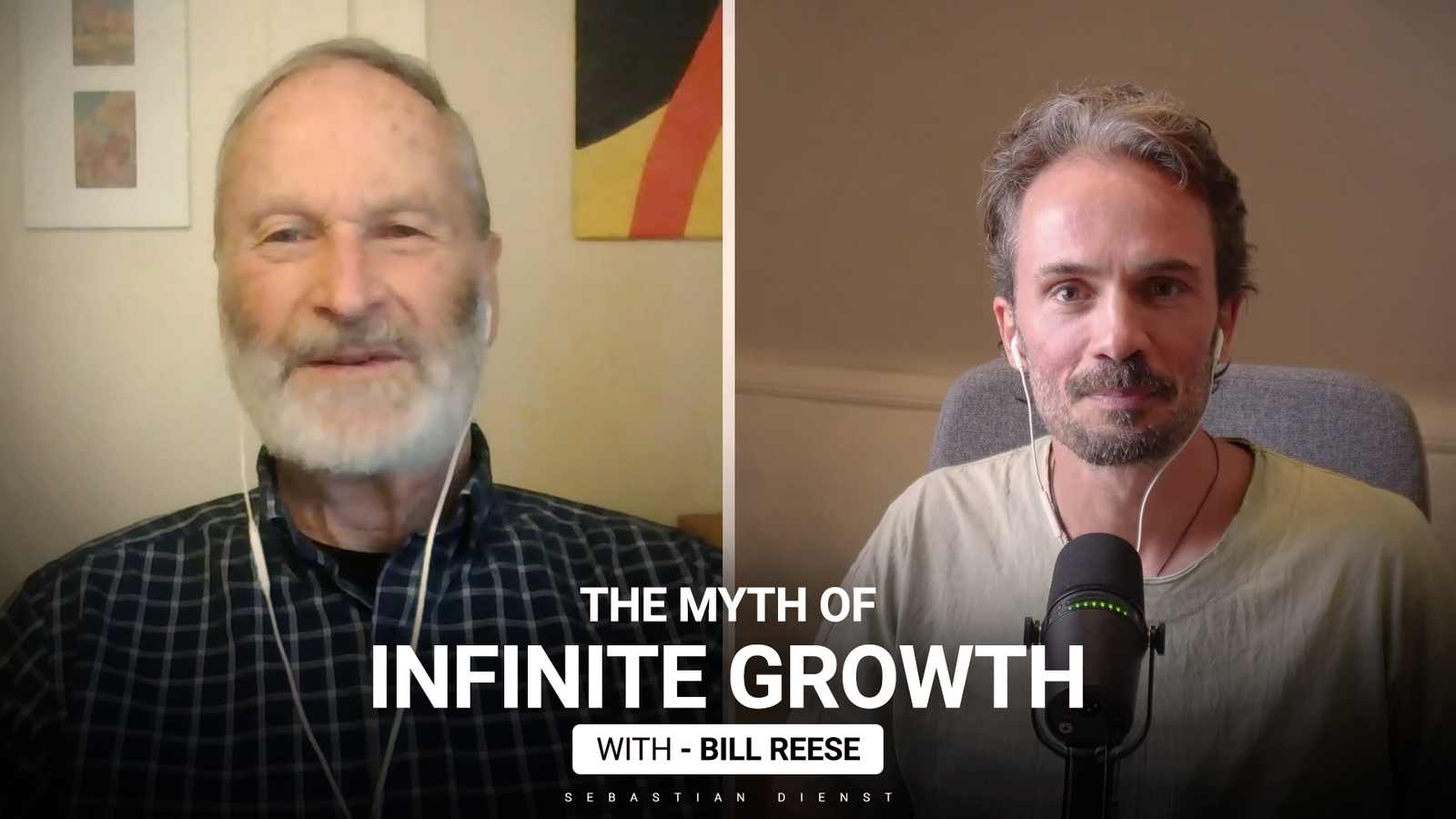
In this episode of The Initiation, Sebastian speaks with Bill E. Rees, ecologist, systems thinker, and co-originator of the ecological footprint – one of the most influential frameworks for understanding humanity’s material relationship to the Earth.
Bill reflects on the early experiences that shaped his worldview, from childhood on his grandparents’ farm to a lifelong inquiry into ecology, overshoot, and the dangerous myths underpinning modern civilization. From there, the conversation opens into Bill’s more recent thinking on human exceptionalism, ecological denial, fossil fuel dependency, maladaptation, and why the crises we face are symptoms of a deeper civilizational rupture.
Together they unpack:
- the origins of the ecological footprint and what it reveals about humanity’s overshoot
- why climate change is not the root crisis, but a symptom of a much larger breakdown
- human exceptionalism, social constructs, and the illusion that we are separate from nature
- how modern civilization displaces other species by expanding the human niche
- why fossil fuels enabled the explosive growth of population, complexity, and consumption
- the collapse of cooperation at scale – and the rise of competition, hierarchy, and dark triad leadership
- why green growth, decoupling, and techno-optimism may be forms of denial rather than real solutions
- why humanity may be heading toward a painful but unavoidable correction
A sobering and unsparing conversation about ecological reality, civilizational overshoot, and the possibility that breakdown may be the necessary threshold for a different way of being on Earth.
–
If you’re new to The Initiation, you may also want to explore Season 1, where I lay the foundations for the entire series. Across the first nine episodes, we dive into the core themes shaping our moment in history – from the rise of artificial intelligence and the breakdown of our monetary system to the climate crisis, geopolitics, and the breakthrough forces pointing toward transformation. Season 1 offers the wider context for everything we explore in this podcast.